
Collaborative AI: Multi-Agent Systems Transform Industry
Unlocking the Power of Collaborative AI: How Multi-Agent Protocols Will Transform Industry
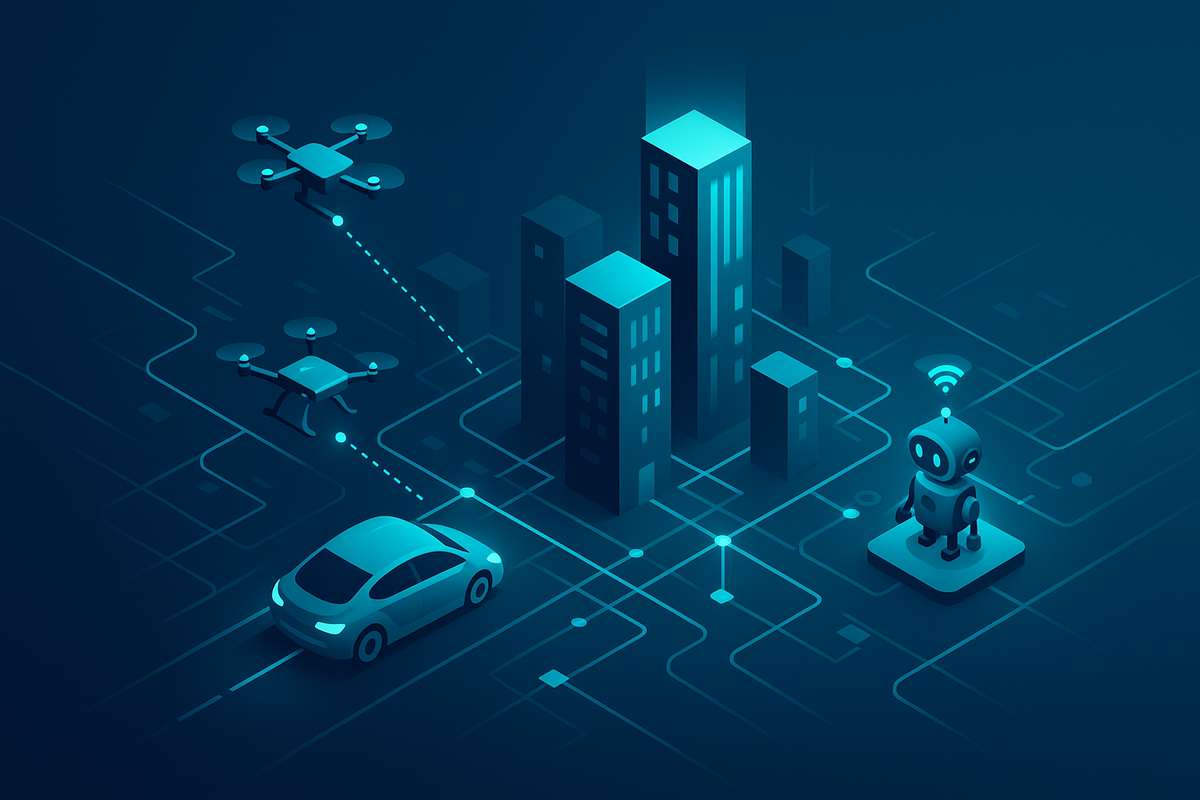
Imagine a digital city buzzing with activity—self-driving cars weaving through traffic, drones delivering packages, chatbots helping people find answers, and digital traffic lights keeping everything organized. Each of these isn’t working alone; they’re little experts, sharing what they know and teaming up to get the job done. This cooperative world is the core idea behind multi-agent systems, or MAS, and it’s about to revolutionize how we build, scale, and run smart solutions in every industry.
In this post, we’ll take you on a tour—from what multi-agent systems are, to the everyday headaches of making them work, to the breakthrough solution of Agent to Agent (A2A) protocols, real-world ways to try them out, and finally, a glimpse of the dazzling future ahead. Whether you’re dreaming up the next great automation, scaling your business with smart agents, or just curious about where AI is headed, you’ll find practical tips, real examples, and a roadmap for getting involved. Ready? Let’s dive in.
Understanding Multi-Agent Systems: The Digital City Analogy
Let’s start simple. Think of a city humming with life, not of people, but of digital helpers—agents—each with its job. Self-driving cars ferry people to work, drones zip medicine across town, chatbots guide tourists, and digital traffic signals keep things flowing. These agents don’t work in isolation; they share info, adjust to ever-changing situations, and tackle problems as a team.
What’s a Multi-Agent System, Anyway?
A multi-agent system (MAS) is a team of digital players working together in the same environment. Each agent has its own specialty—a delivery bot sorts packages, a helpdesk chatbot answers questions, a traffic-light AI manages the road grid. The “world” they share is packed with surprises and challenges, but what sets MAS apart is their constant collaboration. Agents pass info back and forth, coordinating their moves and adjusting in real time based on what others are doing.
Why Use the Digital City Analogy?
Cities run smoothly because nobody works alone—police, utilities, transit, and crews all play their part, with overlap and teamwork. MAS is just like that in the digital sphere. We break up complex problems into bite-sized tasks and let specialists handle each one, but only if they can communicate. Imagine a city where firefighters and medics couldn’t speak to each other—a disaster. The same is true in AI: collaboration is everything.
Why Are Multi-Agent Systems Essential?
Today’s world is too big for one AI or bot to handle. Try asking a single system to coordinate traffic, do inventory, chat with customers, and handle emergencies—impossible. But split that up? Let bots focus on their strengths, solve problems faster, and you get a system that can scale and adapt as your business grows. That’s why MAS is the backbone of tomorrow’s digital cities in retail, manufacturing, healthcare, and beyond.
So what’s the catch? Building this kind of “digital city” isn’t easy. As you add more agents—just like more people in a city—the challenges multiply. Next, let’s look at what can go sideways, and why most teams struggle as they scale up.
The Challenges of Building Effective Multi-Agent Ecosystems
If launching a few cooperating agents is like hosting a cozy dinner party, building a real-world ecosystem is like running Times Square on New Year’s Eve. Things can get out of hand fast. Here are the three most common challenges that every builder and hustler faces:
1. Scalability: More Isn’t Always Merrier
Adding more agents seems great—until it gets out of control. Each new agent adds more possible interactions, not just one. Just like a party, a few people is manageable; a hundred, and you’ve got chaos. In practice, this leads to slowdowns, lost messages, and systems that get overwhelmed, not smarter.
Real example: An e-commerce company with a dozen inventory bots runs smoothly. Add fifty more, and suddenly bots waste time repeating tasks or talking over each other. The system chokes.
2. Interoperability: When Bots Speak Different Languages
Not every agent is built the same. Some teams use Python, others Java or C++. If bots can’t understand each other, you get digital silos. This kills teamwork.
Example from the field: A logistics firm encounters disaster when drones and warehouse bots can’t agree on message formats. Deliveries miss their mark, and resources go to waste—just because the “languages” didn’t match.
3. Managing Complex Interactions: Herding Digital Cats
Sophisticated agents can make their own decisions—but sometimes, those decisions clash. Agents might depend on each other’s actions, get stuck waiting, or fight over the same resources (like two bots after the same job).
In the real world, this means missed packages, slow responses, or risky situations. The more agents involved, the bigger and knottier these problems become.
Agent to Agent Protocol (A2A): Standardizing AI Communication
So how do we get all these agents—different talents, backgrounds, “languages”—working in harmony? Enter Agent to Agent protocol, or A2A: a universal rulebook for agent teamwork.
Think of A2A as a digital “walkie-talkie” and playbook rolled into one. It lets every agent, no matter who built it, talk, share info, and get jobs done without confusion or security holes.
How A2A Tackles Multi-Agent Nightmares:
- Open Standard: Like traffic rules everyone follows. Any team, anywhere, can use A2A to connect—not just one company’s tech.
- Task-Oriented Messaging: Agents send and receive tasks, but don’t have to wait for instant answers. No more getting hung up—everyone works at their own pace and keeps things moving.
- Capability Discovery: Each agent has a “card” describing what it does—capabilities, credentials, security info. No need for long intros; new agents are easy to onboard.
- Flexible Messaging: A2A isn’t just for “yes/no”—it handles detailed jobs, progress updates, and error reports, even for complex, multi-step collaborations.
- Security and Trust: Only authorized agents can participate; everything is logged, secure, and traceable.
A2A in Action
Let’s say Agent A wants a report. Instead of hunting for someone who might be able to help, Agent A announces the need (“Who can analyze sales data?”). Agent B (a data agent) shares its “card” back. Agent A sends a request, Agent B works at its own pace, and then replies securely. All communication follows the same protocol—reliable, clear, and efficient.
With A2A, your bots don’t just connect—they build real, secure relationships, and you can add or swap agents on the fly with zero drama. Imagine trying to do business if every new employee needed weeks of training just to use email or the phone. A2A is the universal communication tool that makes scaling MAS possible—for scrappy startups and industry giants alike.
Modeling Communication: Insights from Agent-Based Simulations
So how do you try all this out before betting your business on it? That’s where agent-based modeling (ABM) comes in—it’s like building a digital mini-city where you can test, simulate, and see how well your agents work together.
What Is Agent-Based Modeling?
ABM tools (like AnyLogic) let you create digital versions of workers—delivery bots, maintenance teams, sensors—each with their own logic and behaviors. The real breakthrough? You can watch them work together, talk, handle emergencies, or fall apart if things go sideways.
Real-World Example: Managing Wind Farms
Suppose you run a wind farm. Turbines can “break,” and maintenance agents are dispatched to fix them. If a turbine detects a fault, it messages the maintenance crew. That crew can reply, take the job, or—if busy—pass the job along.
Without good communication protocols, crews double-book, turbines go unfixed, and chaos reigns. But with A2A or similarly clear rules, it’s smooth sailing: the right agent is dispatched, each job gets logged, and response times drop.
Visual Tools: Message Sequence Diagrams
You can use diagrams to map who talks to whom—spotting bottlenecks, missed signals, or errors before they hit the real world. As your system grows, you’ll see why universal protocols matter—because the more agents you add, the trickier things get.
Why Protocols Matter in Simulation
Simulations can show hidden snags: what happens when three emergencies hit at once? Handling “concurrent” problems is where well-defined communication shines. With A2A, you adjust a message format or rule and all your agents can work smarter, with no need to rewrite everyone’s code.
In short: if you want to scale up in the real world, start with clear, universal communication in your simulations. This doesn’t just save headaches—it can mean the difference between a smart, efficient digital city and a digital ghost town.
The Future of Collaborative AI: Possibilities and Community Efforts
Now, imagine what happens when these principles are applied everywhere. Collaborative AI, powered by seamless, secure multi-agent teamwork, has the potential to reshape everything from science and logistics to urgent disaster response.
Picture it: a research project where agents scan, summarize, and test millions of documents and models overnight; a warehouse where hundreds of bots coordinate instantly, correcting routes and solving issues on the fly; disaster zones where drones, medical bots, and weather monitors act as a seamless team—sharing real-time info, adapting in seconds, and saving lives.
The real magic of A2A and multi-agent systems isn’t just in how they can automate, but how they enable entire ecosystems to grow—adding new tools, responding to big challenges, and letting anyone plug in fresh ideas with no barriers. One protocol, endless possibilities.
Better yet, you’re never on your own. Open-source tools, community-curated resources like Awesome A2A, forums, and ongoing university research mean you can start small, learn fast, and build boldly—without reinventing the wheel. As more people share, test, and improve on these protocols, the pace of innovation only accelerates.
The world of collaborative AI is a team sport, and now, anyone can join in—whether you’re streamlining industry, solving tough problems, or just tinkering with smart bots in your garage.
Conclusion: Ready for the Next Wave of Collaborative AI?
Multi-agent systems mirror the hustle and bustle of real-life cities—complex, challenging, but infinitely more powerful when everyone works together. Through standard protocols like A2A, we finally have the universal language, the playbook, and the trust to bring digital teams to life in ways we only dreamed of a decade ago.
Ready to see what you can build with collaborative AI? Where could teamwork between digital helpers transform your business, your project, or even your local community? Share your wildest ideas—or your current challenges—in the comments below. Let’s build the digital cities of tomorrow, together!
What problem would you solve if you had a digital city of AI agents at your fingertips? Let’s start the discussion!
Share your thoughts and learn from other builders
What AI agent challenge are you working on? Connect with fellow builders in our community.
🎯 Paid Members Bonus Content
Ready to implement? Here's the technical deep-dive with code examples and visual architecture you can use right away.
💡 Quick Implementation Checklist
- Review the code examples above and adapt to your tech stack
- Use the diagram to map out your system architecture
- Start with a small pilot project to test the concepts
- Share your results in our Skool community for feedback
Are you not entertained?