Organizational AI Success: Transform Your Company
Unlocking Organizational AI Success: Moving Beyond Individual Gains to Company-Wide Transformation
Artificial Intelligence promises to transform business as we know it. And if you’re reading this, you’ve no doubt seen stories—or experienced first-hand—how AI can make day-to-day work faster and easier. Maybe you’ve shaved an hour off your reports or used a chatbot to handle basic support. But if you’re wondering why all these individual improvements aren’t adding up to radical company-wide wins, you’re not alone.
In this deep-dive, I’ll break down the “AI productivity paradox”—why individual gains often don’t move the needle for the business. From there, I’ll share a practical framework for making AI pay off big across your organization, offer strategies to rethink how your company works, and wrap up with actionable advice you can use today. Ready to bust the myths and unlock real transformation? Let’s dive in.
The AI Productivity Paradox: Why Personal Wins Don’t Always Add Up
Let’s kick things off with some good news: AI really is helping people work smarter. Picture Anna, a marketing manager in Denmark. She automates monthly reports and finally gets to eat dinner with her family again. Multiply Anna by thousands, and you’d expect business metrics—revenue, innovation, customer happiness—to shoot through the roof. Right?
Not so fast.
While employees everywhere report up to 30% boosts in productivity from AI tools, company-wide results are lagging behind. Global studies, from Denmark to the United States, show a puzzling gap: individuals are sprinting ahead, but companies are moving at a crawl.
This is what experts call the AI productivity paradox: a thousand small wins don’t always become one big victory.
Here’s why:
- AI helps individuals sprint, but companies win marathons. One person’s boost is great, but real value shows up when teams and workflows connect and evolve together.
- Old workflows drag down new tech. Bolting AI onto outdated processes is like putting a jet engine on a bicycle. It might go fast (for a while), but you won’t finish the marathon.
- Data gets stuck in silos. If Anna’s marketing insights never make it to sales or product, the whole company misses out.
- Change is uncomfortable. New tools without new mindsets just create more friction—power users in pockets and everyone else feeling stuck or left behind.
Bottom line: Company-wide transformation demands more than scattered quick wins. It requires a complete rethink of how people, processes, and data fit together.
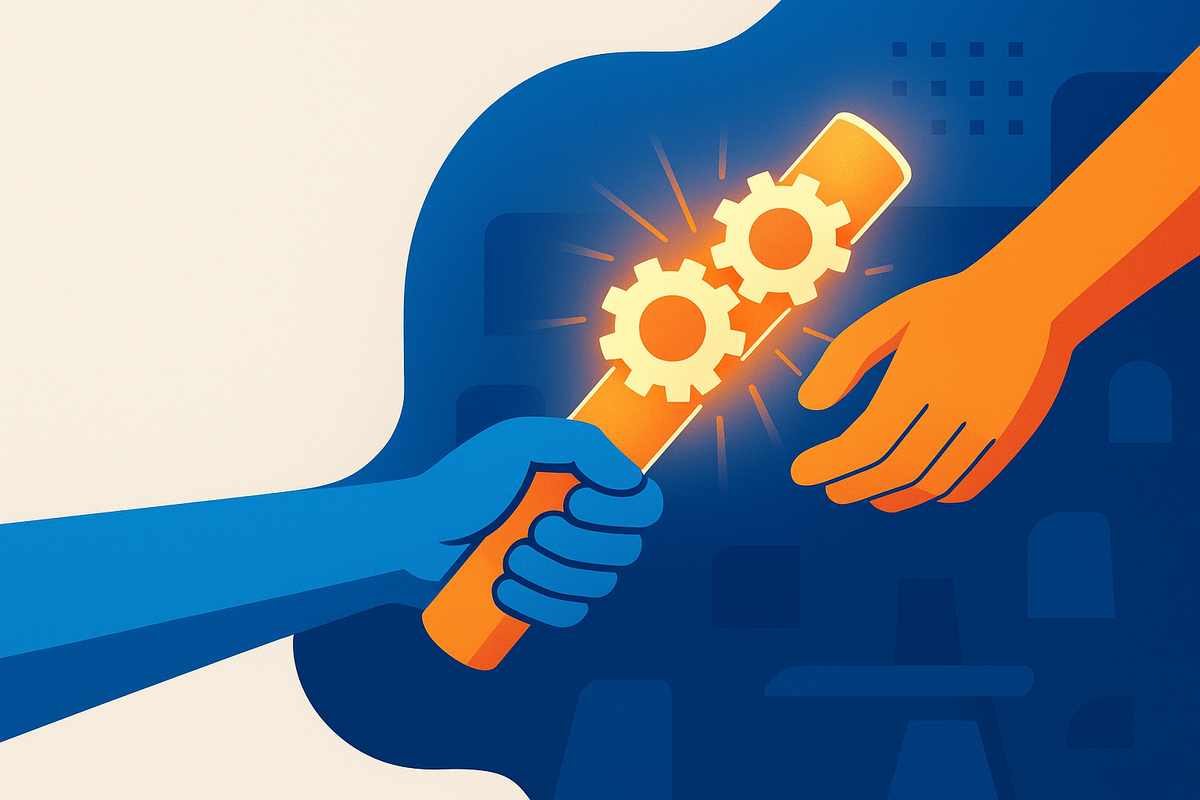
So, if you’re not seeing those sky-high results, don’t worry—you’re not doing anything wrong. But, to get real value from AI, it’s time to shift focus from individual sprints to an organization-wide relay. Let’s talk about how.
Organizational Innovation: The Missing Link in AI Adoption
If AI personal wins don’t naturally add up for the company, what’s missing? The answer is organizational innovation: changing the way your company works—not just the tools it uses.
What Is Organizational Innovation?
Think of it as the upgrade from solo runners to a championship relay team. It’s about getting everyone in sync, updating routines, and rewarding teamwork over solo acts.
Why are old ways holding us back?
Traditional organizations are built around fixed teams, set tasks, and everyone sticking to their own lane—sales sells, IT fixes, HR hires, and so on. Tossing in AI without changing these boundaries is like sending a text in Morse code: you’re not using what’s possible.
AI thrives when:
- Teams are fluid. Sales might help train AI tools. HR might use AI to spot skill gaps that really matter.
- Processes adapt. Instead of following a decades-old approval chain, smart workflows let AI clear low-risk steps so people focus on what matters.
Company A asks employees to use a shiny new AI tool, but keeps all the old approval steps—AI is just more work, and results fizzle.
Company B redesigns workflows, lets AI automate the boring stuff, and rewards smarter teamwork—big wins, more innovation, happier people.
How Do You Make Innovation a Habit?
You need more than a one-off project. True transformation needs ownership, structure, and encouragement to keep pushing past the status quo.
That’s where a hands-on framework comes in—a blueprint for making innovation stick. Curious? Let’s break it down in the next section.
A Three-Part Framework for Company-Wide AI Transformation: Leadership, Crowd, and Lab
You need a playbook, not another buzzword. Ethan Mollick, an AI and organizational change expert, suggests a powerful trio: Leadership, Crowd, and Lab. They’re like the three gears that drive real change. Here’s how you can use them:
1. Leadership: Set the Vision, Clear the Runway
- Share a clear vision. Where do you want AI to take the company? Make sure every team knows why AI matters—not just from an IT or cost-savings angle, but as a roadmap for growth and happier customers.
- Set boundaries for safe experiments. Make it official—trying, failing, and learning is part of the job.
- Model the behavior. When execs run their own AI experiments or share what didn’t work, everyone sees it’s okay to learn out loud.
Tip: Hold “Ask Me Anything” sessions about AI—let leaders answer real questions, no scripts allowed.
2. Crowd: Unleash Bottom-Up Ingenuity
- Give everyone permission (and expectation) to experiment. Your frontline folks know where AI can help—and where it won’t.
- Make sharing wins the norm. Instead of guarding secret hacks, build a culture of open show-and-tell. Lunch-and-learns, shared Google docs, or weekly email roundups turn discoveries into shared knowledge.
- Reward creativity, not just success. Celebrate smart experiments (even if they flopped)—you’ll get more bold ideas, faster.
3. Lab: Test, Benchmark, and Push the Limits
- Create a small, nimble group. Your “Lab” doesn’t need fancy equipment. You just need a place—physical or virtual—to run quick pilots, compare tools side by side, or try wild ideas.
- Benchmark. What’s the best possible outcome? Labs test so the rest of the company knows what “good” looks like.
- Provoke and challenge. Sometimes your Lab’s job is to break the mold. Have them demo crazy-fast results, or play with out-there use cases—this sparks new thinking.
Example: Labs at a law firm pit AI against paralegals to see who can draft a simple contract faster. It’s a fun experiment that reveals real workflow improvements.
Why the Trio Matters
Picture these three as gears: if even one is missing, the machine slows down. Leadership opens doors and sets guardrails, the crowd finds wins and keeps energy up, and the lab keeps everyone on the frontier of what’s possible.
Now—how do you take this from framework to living, breathing strategy? By building org structures ready for what AI demands.
Rethinking Organization Structure and Strategy in the Age of AI
Let’s step back. Even perfect experiments can only go so far if your company’s structure is stuck in the past.
Old School vs. New School
Old way: Roles are split up and rigid—Sarah does contracts, Ben runs sales numbers, Lisa manages projects.
AI way: AI takes over repeatable stuff. Suddenly, the game moves from “Can we do more?” to “Which problems should we solve?”
Real shift: AI moves the bottleneck from “doing” to “deciding.” It’s not about how many reports you can write—it’s about which reports unlock the most value.
Building for Decisions, Not Just Tasks
- Flexible teams win. If you’re still passing work step-by-step, AI will make your process look slow.
- Strategy isn’t just for execs. With routine work automated, every employee needs to ask smarter questions, connect dots, and suggest what comes next.
Learning as a Superpower
AI keeps evolving. That means your company’s ability to learn—and learn fast—is your new secret weapon.
- Continuous learning matters. Make space for regular “AI retros”—quick huddles about what’s working, flopping, and what to try next.
- Culture is king. With AI changing the game, a “just follow orders” culture breeds fear and slowdowns. Instead, reward curiosity and experiments. Make it okay to challenge the old ways—respectfully, of course!
Ethics and Trust
With all this new power comes new responsibility.
- Legal: Who’s accountable for AI-made decisions? You’ll need fresh policies.
- Ethics: Can your team spot bias? Protect customer data? Don’t skip the hard talks—your reputation depends on it.
Build trust: Be open about how AI tools are used and make room for tough questions.
The AI-First Organization
You’re building for speed, learning, and cross-team collaboration:
- Flatter hierarchy. Less waiting for sign-off, more acting on insight.
- Rapid pilots: Try things small and quick before betting big.
- Shared strategy: Everybody helps set direction—not just a few at the top.
Practical Takeaways: Leading the AI Revolution in Your Organization
Let’s get specific. How do you turn these big ideas into action, starting tomorrow?
1. Lead With Vision—and Make It Safe
- Spell out, in plain English, what AI success looks like for your company.
- Make experimentation part of every job, not a side project.
- Be public about mistakes and wins.
2. Open the Floor to Everyone
- Set up easy, visible spaces (Slack channel, weekly roundup) for people to share AI hacks and lessons.
- Run regular “AI show-and-tell” sessions — reward boldness, not just results.
3. Supercharge Your Lab
- Even a small team or pilot group can test tools, document wins, and benchmark what good looks like.
- Make lab results accessible—don’t hide successes or failures.
4. Rethink “Success” Metrics
- Don’t just measure faster task completion—set goals around customer experience, creative new products, or better teamwork unlocked by AI.
- Regularly revisit what AI lets you do now that you couldn’t before.
5. Challenge Every Assumption
- Attack processes built for a pre-AI world.
- Bring diverse teams together for “reimagine with AI” sprints.
- Don’t get comfortable—learning is your edge.
Small Steps, Big Change
Start with one team. Celebrate the little wins. Scale up what works. Iterate. Share. Repeat.
Ready to Lead the Way?
Here’s the thing: the AI future isn’t waiting for anyone. The companies that unlock value will be the ones willing to experiment, challenge old habits, and turn individual sprints into team marathons.
What bold step will you take this month to move from scattered AI wins to true organizational transformation?
Drop your thoughts, stories, and questions below—let’s build this future together.
Want more hands-on AI guides for your business? Subscribe or follow me for weekly, practical strategies straight from the senior AI director’s playbook.
Share your thoughts and learn from other builders
What AI agent challenge are you working on? Connect with fellow builders in our community.
🎯 Paid Members Bonus Content
Ready to implement? Here's the technical deep-dive with code examples and visual architecture you can use right away.
💡 Quick Implementation Checklist
- Review the code examples above and adapt to your tech stack
- Use the diagram to map out your system architecture
- Start with a small pilot project to test the concepts
- Share your results in our Skool community for feedback
Are you not entertained?