
AI Superpowers: Agents That Talk - A Simple Guide
Unlock Your AI's Superpowers: The Simple Guide to Agents That Talk
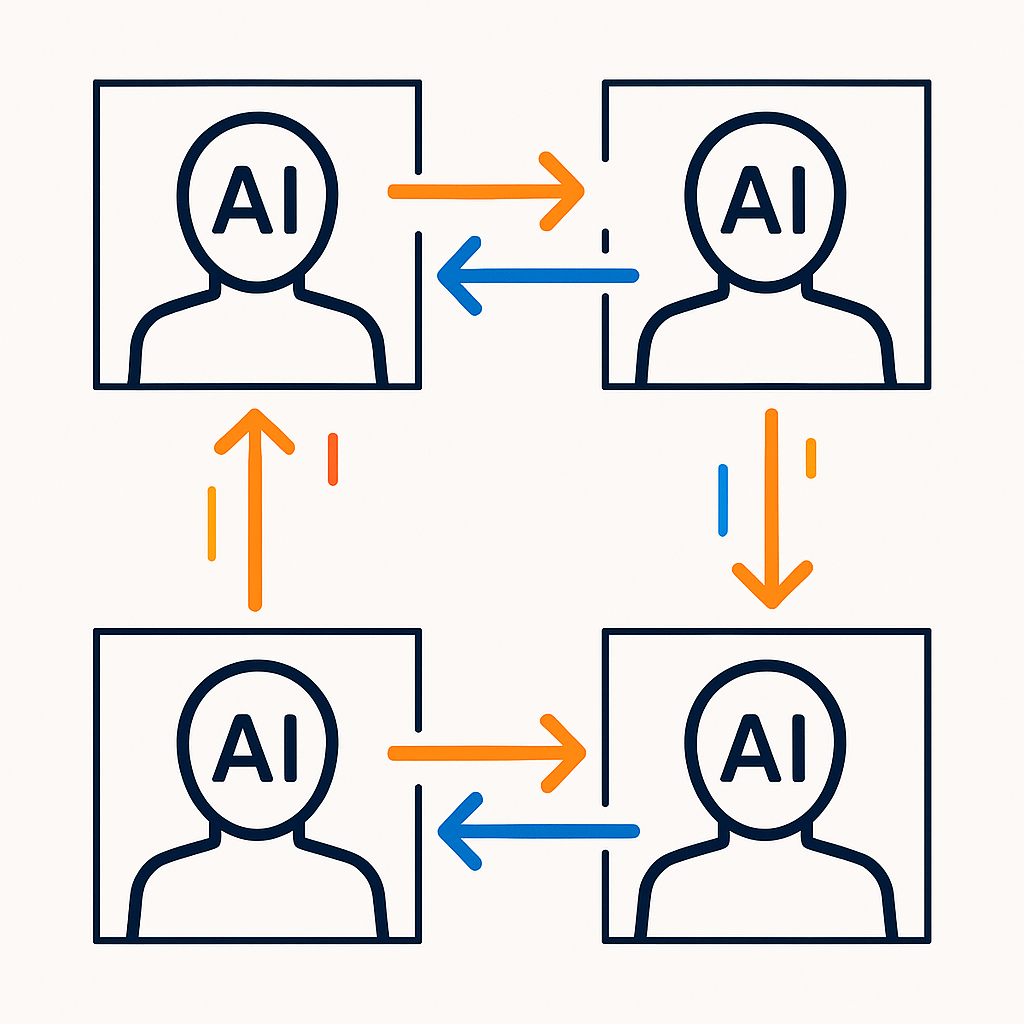
Hey there, fellow hustlers and builders! I'm here, after 15 years deep in the AI trenches, to tell you something game-changing: The future of AI isn't just one super-smart AI. It's about lots of smaller, smart AI workers—we call them "agents"—that know how to talk to each other. Think of it like building an unstoppable team, where each player (agent) has a special skill and a clear way to communicate. This "agent-to-agent communication" is the secret sauce.
Why This Matters (Or: Why Should You Care?)
You know how your business runs on teams? Sales talks to marketing, engineering talks to support. AI is now doing the same thing. When AI agents can chat and work together, it unlocks massive power for you, even if you're not a hardcore coder.
- Build Smarter, Faster: Instead of one giant, complex AI trying to do everything, you can have smaller AIs that specialize. This makes building your AI tools easier and quicker.
- Less Headaches, More Reliability: If one AI agent trips up, the others can often pick up the slack. This means your whole system is tougher and less likely to crash.
- Grow Without Limits: Need to do more? Just add another AI agent to the team. It's like adding more workers without hiring a huge staff.
- Automate Truly Complex Tasks: This isn't just about simple tasks anymore. With agents talking, they can tackle really big, multi-step jobs, freeing you up for bigger ideas.
The Backstory (Or: How We Got Here)
For a long time, AI was mostly about big, singular brains doing one job really well. Like a super-smart calculator. But the world is messy, and problems are often too big for one AI to handle alone. So, we started thinking: what if we break down big problems into smaller chunks and give each chunk to a dedicated, smart AI?
This idea of "Multi-Agent Systems" (MAS) has been around. But then, Large Language Models (LLMs)—those super-smart AIs that can understand and talk like humans—came along. Suddenly, our little AI workers could communicate in much more natural and flexible ways. This changed everything, making their teamwork way more powerful than before.
🚀 Want the Full AI Agent Playbook?
Get exclusive access to advanced strategies, real-world examples, and step-by-step implementations that are transforming businesses.
Join the Community →The Big Picture (Or: Where This is Going)
We're headed towards what some call the "Internet of Agents." Imagine a world where millions, maybe billions, of AI agents are constantly finding each other, offering their skills, and working together to solve problems. It's like a global marketplace where AIs are the workers, constantly collaborating.
To make this work, these agents need clear "traffic rules" for their conversations—we call these "protocols." We've moved from older, more complicated rules (like FIPA ACL and KQML, which were a bit like old telephone systems) to newer, simpler, web-friendly rules that make it easy for AIs to find each other, share data, and get things done, safely and quickly. And yes, safety is a huge part of this. We're building in strong security from the start.
Go Deeper: Put This to Work
This isn't just tech talk; it's about building real value. Here's how you can put these ideas into action, whether you're building a product or just building your business.
For the Hustler (Business-Focused):
- Automate Your Workflows: Imagine a sales agent checking leads, then telling a marketing agent to send tailored emails, and finally informing a customer service agent to follow up. All automatically, all talking to each other. This is your AI dream team in action.
- Scale Your Operations: Need to process more orders during a busy season? Add more "order-processing" agents. They'll join your AI team seamlessly, sharing the load.
- Smart Customer Support: One agent handles the initial chat, another pulls info from your database, and a third creates a personalized solution. They're all collaborating behind the scenes to give your customer the best experience.
- "AI Talent Pools": Think of these agents as a pool of specialized AI talent you can tap into. When you need a quick report, a "data analyst" agent can talk to a "data retriever" agent to get it done.
For the Builder (Non-Tech Dev):
- Start Simple with MCP: The "Model Context Protocol" (MCP) is your first step. It's like teaching one of your AI workers how to use a specific tool – say, your email app or a database. This lets your AI pull info or take actions outside itself.
- Example: You have an AI that helps write blog posts. Use MCP to let it "talk" to your image library (the tool) so it can pick relevant pictures.
- Then Add A2A: Once your AIs know how to use tools (MCP), "Google's Agent-to-Agent Protocol" (A2A) lets them talk directly to other AIs. It's like two friends sharing a task. They even have "AgentCards," which are like digital business cards that tell other AIs what they can do and how to reach them.
- Example: Your blog-writing AI (using MCP to access images) can now use A2A to ask another AI (a "fact-checker" agent) to verify information before publishing.
- Think Like Lego Blocks: Don't try to build one giant AI. Build small, smart agents that do specific things, and then connect them using these communication rules. Each agent is a Lego brick, and the protocols are how they snap together.
- Don't Fear Failure (Too Much): These systems are built to be robust. If one agent goes down, others can often work around it or take over. It's like your team always having a backup plan.
This whole world of AI agents talking to each other is moving fast. It's not just for big tech companies anymore. It's becoming the standard for building smart, adaptable systems that can truly change how we work and live.
What's one complex, multi-step problem in your business that you think an AI agent team could solve?
💬 Join the Conversation
Share your thoughts and learn from other builders in our community. What AI agent challenge are you working on?